The impact of feral honey bees on endangered seabirds in theHawaiian Islands
Submitted by: Andre Raine, Archipelago Research and Conservation
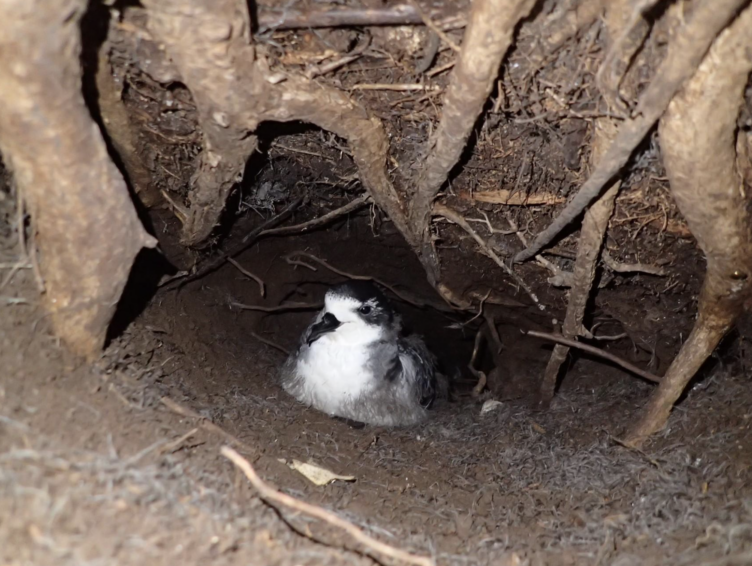
The ‘aʻo (Newell’s shearwater Puffinus newellii) and ‘uaʻu (Hawaiian petrel Pterodroma sandwichensis) are both endangered seabirds endemic to the Hawaiian Archipelago. The impact of introduced predators (such as cats, rats, pigs and barn owls) on these species is well known and is a major conservation issue. Due to this, there are now seven management sites focused on protecting these species on the island of Kauai, where ongoing predator control operations have successfully decreased predation rates and increased reproductive success rates over time. However, in recent years a new threat has emerged – feral honey bees (Apis mellifera, bee) – which were deliberately introduced to the Hawaiian Islands starting in 1857 for bee-keeping.
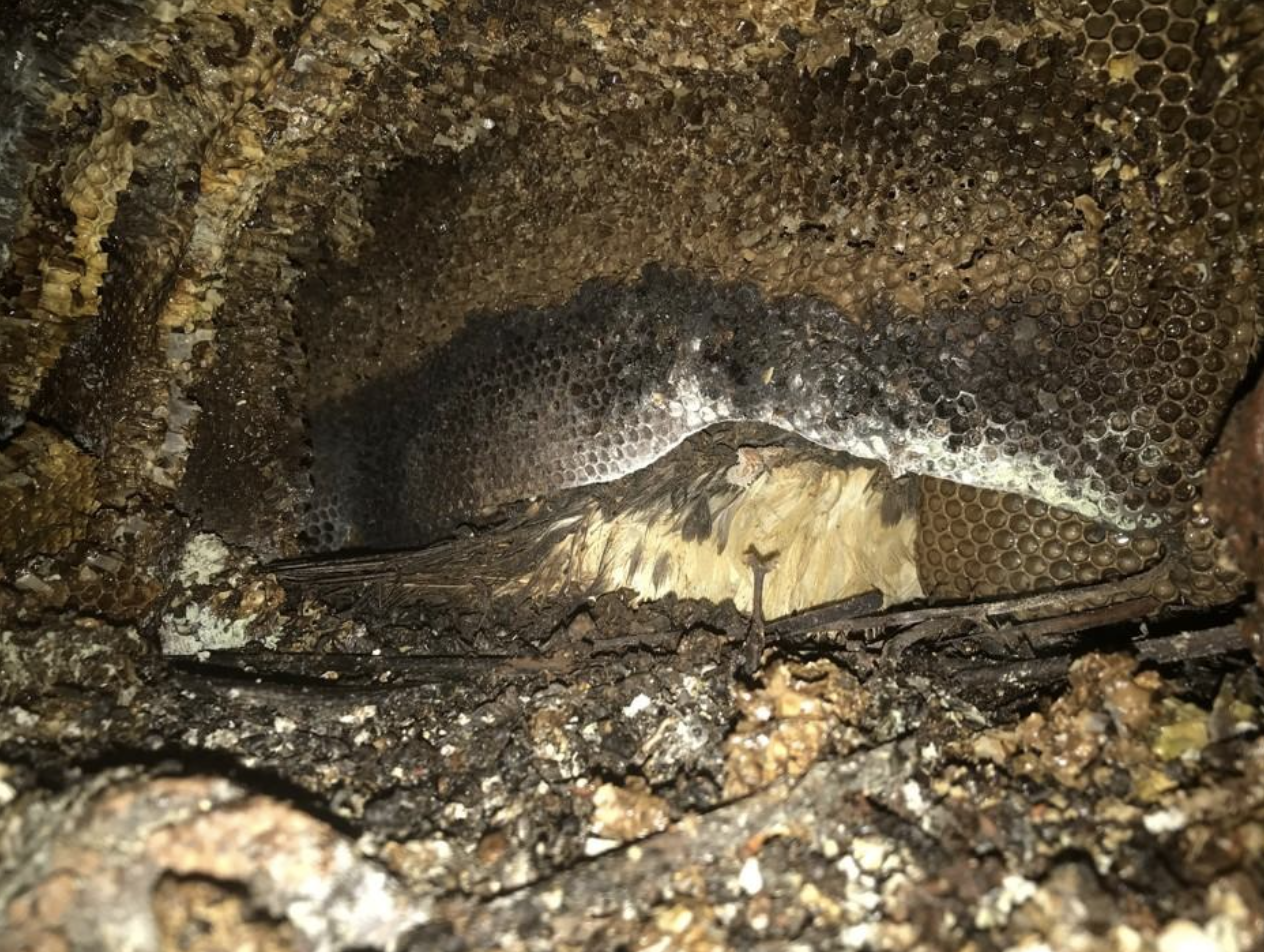
The impact of bees on seabirds has not been previously documented, although it has been noted in the congeneric Bermuda petrel (Pterodroma cahow) that in rare instances burrows can be occupied by bees. In our paper, published in volume 17(2) of the journal Human-Wildlife Interactions, we highlight the impact of feral honey bees on endangered seabirds by documenting records of bee invasions at burrows within our management sites as well as additional records from the island of Lānaʻi. Between 2011 and 2021, 17 bee swarms were recorded at seabird burrows on both islands combined (13 on Kauaʻi and 4 on Lānaʻi), consisting of 14 ‘uaʻu burrows and 3 ‘aʻo burrows. Bee swarms at burrows were concentrated in the summer months, and none occurred during the winter. This overlaps with the bee swarming season in Hawaiʻi, which, due to its tropical weather, is more extended than the mainland.
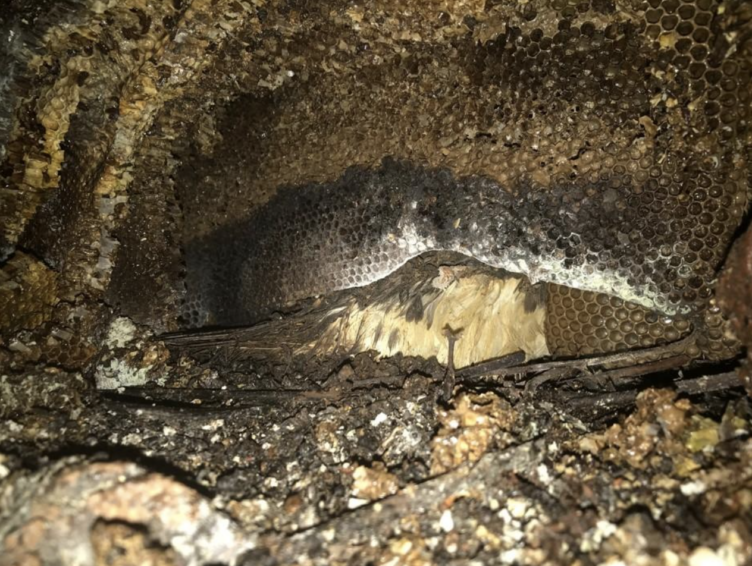
Ten (58.8%) of these incidents resulted in the bees taking over the burrow and building a hive inside. Of the 10 takeovers, all resulted in a failed breeding season in that year and six resulted in a seabird mortality (including two instances where both adults of a breeding pair were killed). The likelihood of a seabird mortality during a burrow takeover event was related to the time of year when the takeover occurred. Takeovers occurring before incubation (which on Kauaʻi occurs in June/July) appeared to be less prone to mortality, as attending adults presumably retreat upon entering a burrow that has been taken over by bees. On the other hand, adults that are incubating are more likely to get trapped inside the burrow and stung to death by bee swarms – particularly when considering that a single bee colony can consist of 18,000-20,000 worker bees. Burrow takeovers occurring later in the season will almost certainly result in the death of the chicks, which have nowhere to go once the bees build their hives inside their burrows. Breeding was also less likely to be initiated in the following year after a burrow takeover, often because an adult or adults were killed during the event. Furthermore, in one case the burrow chamber was too deep to remove the bee hive, which had been built in the back of the chamber itself. The decision was made by project managers to seal the burrow off to prevent the returning adult from getting covered in honey, which had coated the burrow chamber. This represents an additional factor to be aware of, because even if a hive is abandoned, it can still have serious consequences to returning birds.
Removing bees from active burrows should be considered a seabird conservation priority – this is also true for ensuring the safety of staff operating within the seabird colonies (particularly those prone to anaphylaxis). A method successfully used on Kauaʻi (and developed by Hallux Ecosystem Restoration LLC, Lihue, Kaua’i) is a “bee vacuum” which consists of a battery powered shop vac and an in-line insect collection container with removable mesh inserts that can be swapped out mid removal to make room for more bees. Staff in protective bee suits first use a bee-smoker to smoke the burrow, which calms the bees and brings the majority of the bees back to the hive and onto the combs. The bees and comb are then vacuumed out of the burrow and into the collection container where they can then be humanely disposed of. While the bee vacuum is an important management tool, it is a reactive technique that can only be used once a burrow has been taken over and doesn’t prevent a failed breeding season (or mortalities). Therefore, proactive techniques should also be considered. One that is currently now being used on Kauaʻi is the of bee swarm pheromone traps at strategic locations within management areas.
Both the ‘aʻo and ‘uaʻu face a wide range of threats throughout the Hawaiian Islands, with the result that populations have declined dramatically on islands such as Kauaʻi in recent decades. While the conservation impact of bees to seabirds is currently minimal compared to threats such as power line collisions and introduced mammalian predators, the fact that it leads to nest abandonment and even the death of breeding adults or chicks is a cause for concern. If climate change results in an increase in these incidents, they could rapidly become a serious threat to the survival of these two species, as bee colony densities can be as high as 100 nests per km²
.
To read the full paper, please visit the following link: The Impact of Feral Honey Bees on Endangered Seabirds in the Hawaiian Islands.