The Owl Gull: Swallow-tailed Gulls’ Exclusive Nocturnal Foraging
Submitted by: Sebastian Cruz, American Bird Conservancy
Most seabirds rely on daylight for foraging, but the Swallow-tailed Gull (Creagrus furcatus), near-endemic to the Galápagos Islands, has evolved a remarkable exception — it is the only fully nocturnal foraging gull in the world.
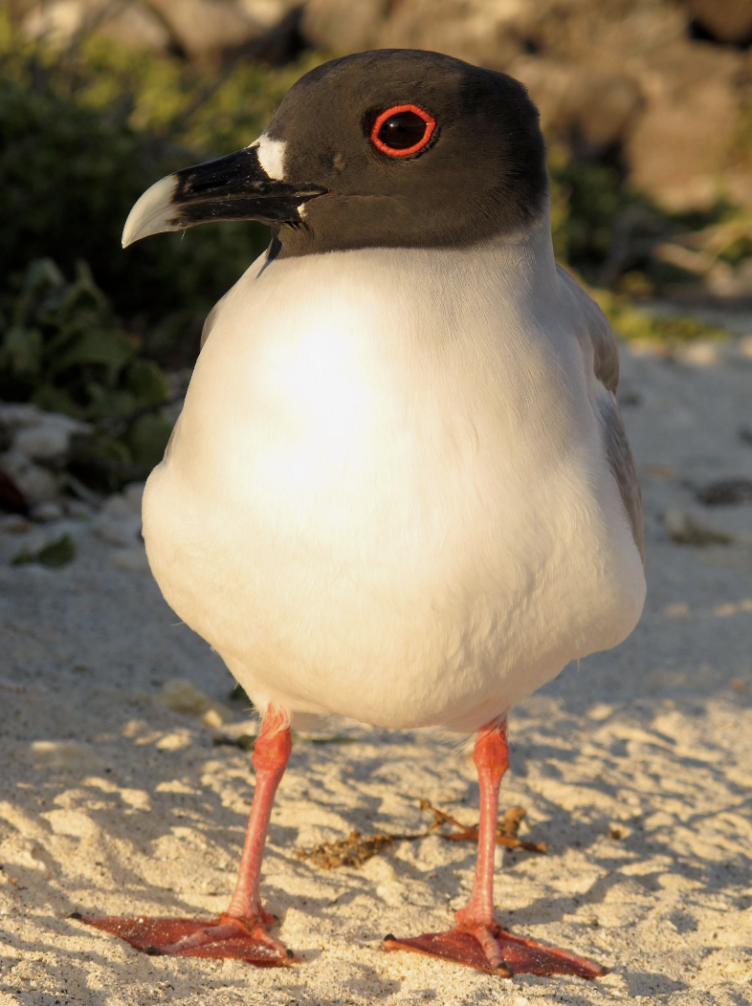
Using GPS tracking, our study confirms what previous observations suggested: Swallow-tailed Gulls head out to sea exclusively at night, traveling up to 100 km offshore to feed on squid and lanternfish that vertically migrate to the surface after dark. By analyzing movement patterns across multiple breeding colonies over three years, we found strong spatial fidelity to specific foraging areas and differences in trip lengths and behaviors between colonies.
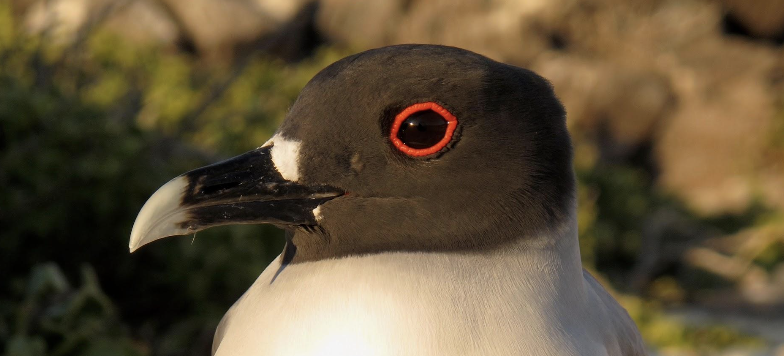
Nocturnal foraging may reflect an evolutionary trade-off. The gulls’ specialized large eyes synchronize activity with the lunar cycle, and avoidance of daytime predators like frigatebirds highlight the challenges and benefits of an exclusively nocturnal lifestyle. In tropical waters, nighttime productivity increases significantly due to diel vertical migration, as prey such as squid and lanternfish move to the surface. By foraging at night, Swallow-tailed Gulls exploit a relatively empty niche for seabirds in the Eastern Tropical Pacific.